


MINISTRY OF JUSTICE RECEIVES ACHIEVEMENT IN BUSINESS EXCELLENCE AWARD
November 16, 2026
test
November 17, 2026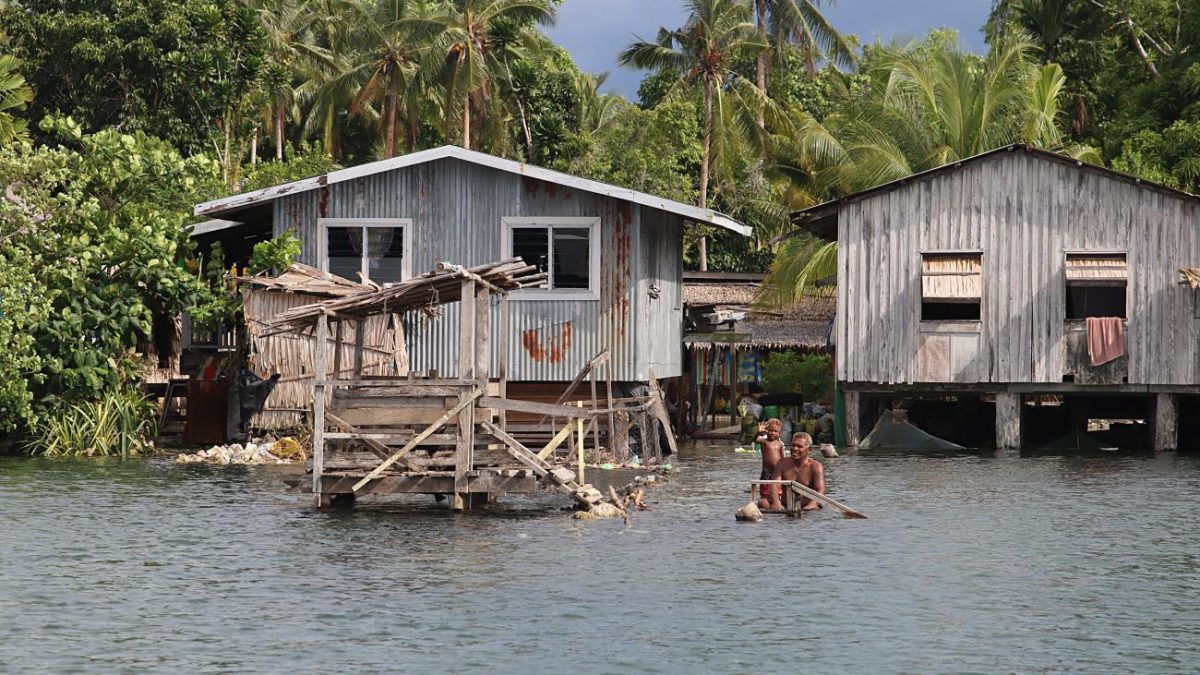
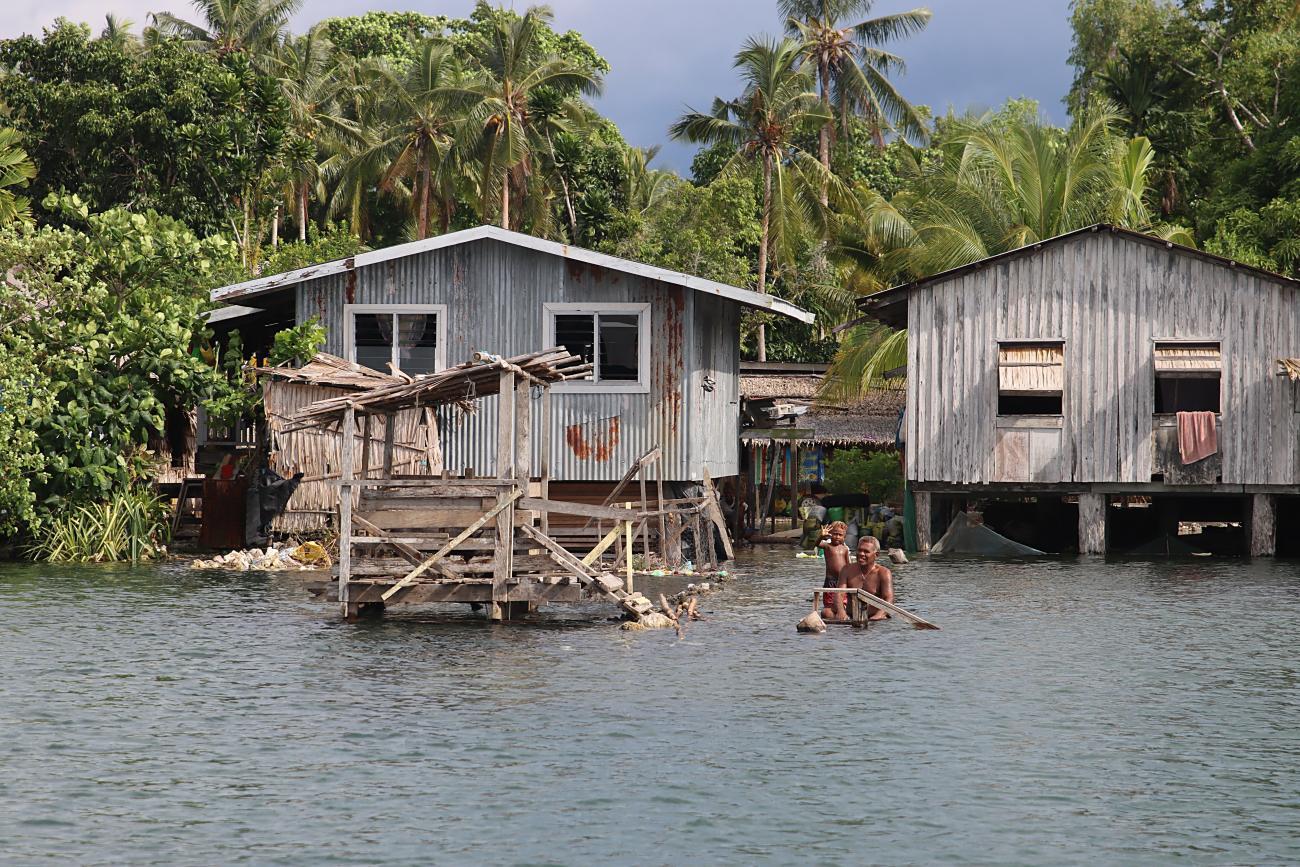
A father and his son were in front of coastal homes in Malaita, Solomon Islands. Pacific communities are increasingly vulnerable to rising sea levels, which threaten homes, livelihoods and personal identity documents.
For generations, Pacific peoples have moved within and beyond the region in response to changing environmental, economic and social conditions. Today as climate change reshapes communities across the Pacific, attention often focuses on rising sea levels, extreme climate events and adapting infrastructure to withstand their impact. Yet resilience is always about people. Every person needs to be able to prove who they are, access essential services and maintain their connection to their country and community, even in times of crisis.
Countries in the Pacific have agreed on the Pacific Regional Framework on Climate Mobility. The Framework recognizes people’s preference to remain in their homes while it also stresses the importance of ensuring that human mobility is orderly, safe and responsible when mobility is a choice or a necessity. At the heart of this challenge lies individuals and their legal identity. People need identity documents to obtain passports, visas, residency permits, and to access regular migration pathways. Missing, expired or destroyed documents can prevent people from moving legally and safely. If left unresolved over time, the absence of official evidence of nationality, identity, place of birth and family links can also leave people at risk of statelessness. Registration data can support Governments to facilitate planned relocations and evidence-based policies.
A birth certificate may appear to be a simple document. But its significance extends far beyond a piece of paper. It provides proof of age and parentage, which are key to establishing nationality, enabling access to education, healthcare, social protection, financial services, employment, job security as well as internal and international mobility. Currently, 1 million children under the age of 5 in the Pacific do not have birth certificates. And the number of adults without proof of legal identity in the Pacific is unknown.
Many communities are spread across remote and geographically dispersed islands, making access to registration services challenging. Climate change, including floods, cyclones and other disasters, can destroy identity records, disrupt registration systems and displace entire communities. Without proof of legal identity or nationality, individuals may struggle to access assistance, services and legal protections. As displacement and migration across borders become more common, laws and policies need to be updated to prevent statelessness and ensure citizenship rights are protected for those living abroad as well as for future generations born outside their country of origin.
Recognizing these risks, the Global Recommendations on Nationality and Statelessness in the Context of Climate Change highlight the importance of universal and accessible birth registration, secure civil registration records, including mechanisms to facilitate acquisition and reacquisition of such records and documents that prove nationality before, during and after climate-related disasters and displacement. These measures help ensure people can prove their legal identity and nationality even when climate-related disasters force them to leave their homes.
This is where the Asia-Pacific Civil Registration and Vital Statistics (CRVS) Decade has played a transformative role.
Launched in 2014 and recently extended to 2030, the Asia-Pacific CRVS Decade provides a regional framework for enhancing civil registration systems and ensuring that everyone can benefit from legal identity. Coordinated by ESCAP and regional partners, the initiative has brought governments together around a shared vision: all people in Asia and the Pacific will benefit from universal and responsive CRVS systems facilitating the realization of their rights and supporting good governance, health and development.
In the Pacific, this has translated into practical actions that help ensure no one is left behind. Data-driven analysis has helped identify gaps in registration, highlighting disparities among different populations, such as children born to young or unmarried mothers and people living in remote communities. By understanding who is missing and why, countries, such as Fiji, have been able to develop more inclusive systems, policies and outreach programmes. ESCAP and its partners have also supported efforts to improve registration systems, data quality and analytical skills to produce reliable vital statistics.
These achievements are becoming even more important as countries confront the growing impacts of climate change. Strong civil registration systems and the data they produce are not only administrative tools; they are essential components of resilience. Accurate and secure records help governments continue delivering services during emergencies, support disaster response efforts and protect individuals’ access to rights and entitlements.
As Pacific countries adapt to an increasingly uncertain climate future, investments in resilient and inclusive CRVS systems should be recognized as an essential part of broader climate adaptation efforts. The experience of the Asia-Pacific CRVS Decade demonstrates that strong civil registration systems not only improve governance and service delivery but also help reduce the risk of statelessness and support durable solutions for people displaced by climate-related events.
Ultimately, resilience begins with recognition. In a rapidly changing world, ensuring that every birth and death is registered, every person is counted and every individual can prove who they are is more important than ever. Legal identity is not simply a matter of documentation. It is a foundation for belonging, protection and opportunity, and an essential pillar of climate resilience in the Pacific.
Source – Belonging beyond rising seas | ESCAP